

 Image 1 of 2
 Image 2 of 2
Your child is not being difficult. Mealtime is. Here is the plan that fixes it.
If your child with autism eats the same five foods, refuses everything new, or turns every meal into a battle, you already know that "just keep trying" is not a strategy. The waitlist for feeding therapy is months long. The advice online is generic. And your child cannot afford to wait.
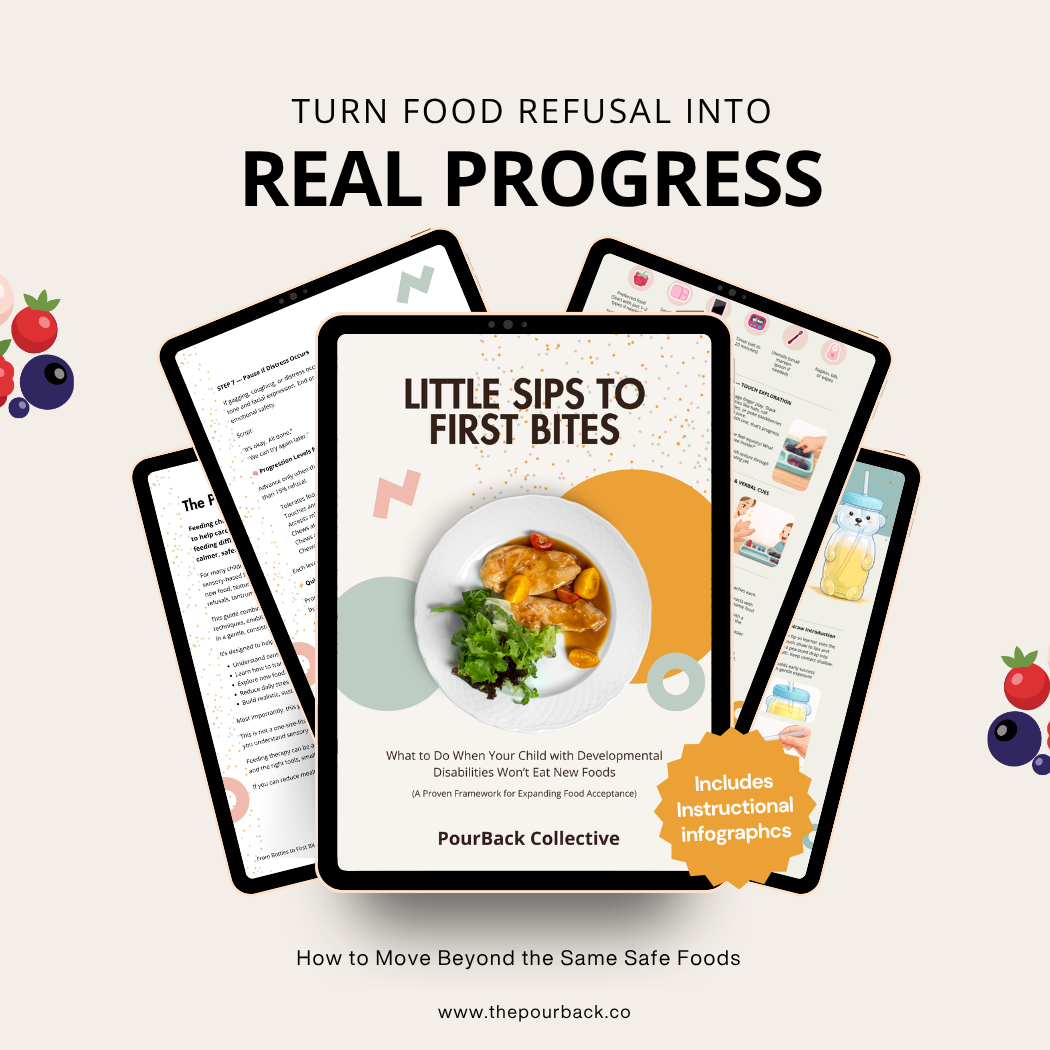
This 95-page guide gives you the structured, evidence-informed feeding plan that most families do not get until they are deep into a therapy program and already exhausted.
WHAT YOU WILL LEARN
Why your child refuses new foods and what is actually driving it: sensory processing, oral motor function, or learned behavioral patterns
How to use reinforcement-based feeding strategies at home without needing a therapy degree to implement them
How to introduce new foods without pressure, without force, and without setting mealtime back three weeks every time you try
How to adapt three clinical feeding therapy approaches for real home use so your child builds actual eating skills, not just tolerance
How to reduce gagging, meltdowns, and mealtime dread so food stops being the hardest part of your day
WHO THIS IS FOR
Parents and caregivers of children with autism or developmental disabilities who eat a limited diet or refuse new foods. Families on a feeding therapy waitlist who need real structure right now. Anyone who has tried everything and needs to know what actually works.
THE RESULT
You walk away with a clear feeding plan, documented progress you can track, and the confidence to lead mealtimes without guessing, forcing, or dreading what happens next. No more stalled progress. No more starting over.
WHY IT WORKS
This guide pulls from ABA-based feeding protocols, sensory integration strategies, and real-life home implementation because your kitchen is not a clinic and the plan has to work in the real world. Every strategy is structured, repeatable, and built for caregivers doing this without a team behind them.
BONUS
Feeding Protocol Infographics are included for fast, visual reference during implementation, so you spend less time rereading and more time making progress.
The feeding therapy waitlist is not a plan. This is.
If your child is stuck on the same five foods and you are done waiting for someone to hand you a roadmap, this is your next step.
Your child is not being difficult. Mealtime is. Here is the plan that fixes it.
If your child with autism eats the same five foods, refuses everything new, or turns every meal into a battle, you already know that "just keep trying" is not a strategy. The waitlist for feeding therapy is months long. The advice online is generic. And your child cannot afford to wait.
This 95-page guide gives you the structured, evidence-informed feeding plan that most families do not get until they are deep into a therapy program and already exhausted.
WHAT YOU WILL LEARN
Why your child refuses new foods and what is actually driving it: sensory processing, oral motor function, or learned behavioral patterns
How to use reinforcement-based feeding strategies at home without needing a therapy degree to implement them
How to introduce new foods without pressure, without force, and without setting mealtime back three weeks every time you try
How to adapt three clinical feeding therapy approaches for real home use so your child builds actual eating skills, not just tolerance
How to reduce gagging, meltdowns, and mealtime dread so food stops being the hardest part of your day
WHO THIS IS FOR
Parents and caregivers of children with autism or developmental disabilities who eat a limited diet or refuse new foods. Families on a feeding therapy waitlist who need real structure right now. Anyone who has tried everything and needs to know what actually works.
THE RESULT
You walk away with a clear feeding plan, documented progress you can track, and the confidence to lead mealtimes without guessing, forcing, or dreading what happens next. No more stalled progress. No more starting over.
WHY IT WORKS
This guide pulls from ABA-based feeding protocols, sensory integration strategies, and real-life home implementation because your kitchen is not a clinic and the plan has to work in the real world. Every strategy is structured, repeatable, and built for caregivers doing this without a team behind them.
BONUS
Feeding Protocol Infographics are included for fast, visual reference during implementation, so you spend less time rereading and more time making progress.
The feeding therapy waitlist is not a plan. This is.
If your child is stuck on the same five foods and you are done waiting for someone to hand you a roadmap, this is your next step.